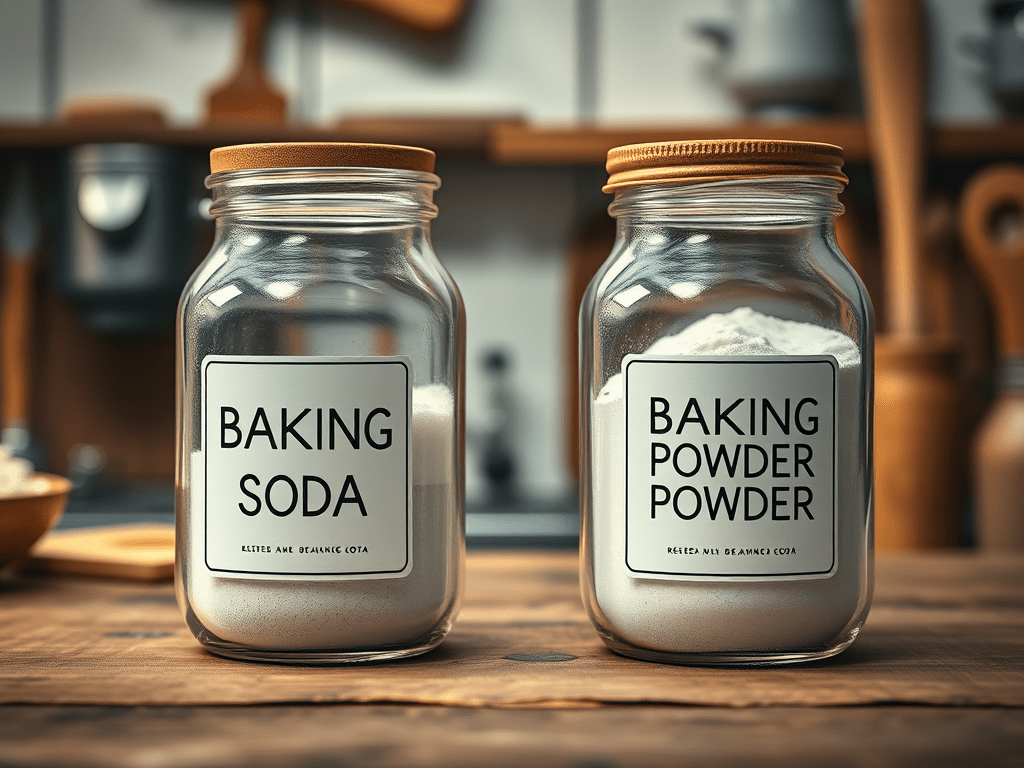
If you’ve ever looked at a recipe and wondered why it calls for baking soda, baking powder, or sometimes both, you’re not alone. These two ingredients may look similar, but they behave very differently in baking.
Understanding how they work can make a big difference in how your cookies, cakes, and muffins turn out.
Let’s break it down.
What Is Baking Soda?
Baking soda is pure sodium bicarbonate, which is a base. In order to activate and produce the bubbles that make baked goods rise, baking soda needs an acid.
Common acidic ingredients in baking include:
- brown sugar
- yogurt
- buttermilk
- lemon juice
- vinegar
- molasses
- sour cream
When baking soda reacts with an acid, it creates carbon dioxide bubbles that help your baked goods rise and spread.
In cookies, baking soda often helps create chewier cookies with more spread.
What Is Baking Powder?
Baking powder is essentially baking soda with the acid already included.
It contains:
- baking soda
- a powdered acid
- a drying agent (usually cornstarch)
Because the acid is already present, baking powder only needs moisture and heat to activate.
Most baking powder is double-acting, which means it activates twice:
- when mixed with liquid
- again when exposed to heat in the oven
Baking powder tends to produce more lift and puffiness, which is why it’s often used in cakes and muffins.
Why Some Recipes Use Both
Some cookie recipes call for both baking soda and baking powder. Each ingredient contributes something slightly different.
Baking soda encourages spreading and browning, while baking powder helps provide lift.
Together, they can create cookies that are soft in the center with just the right amount of height.
What Happens If You Use the Wrong One?
Because these ingredients behave differently, swapping them isn’t always successful.
If a recipe calls for baking soda but you use baking powder instead, your cookies may turn out puffier and less chewy.
If a recipe calls for baking powder but you substitute baking soda, the result could be flat cookies or even a slightly metallic taste if there isn’t enough acid present to balance it.
The Takeaway
Baking soda and baking powder may look similar, but they serve different purposes in baking.
Baking soda reacts with acidic ingredients and often produces cookies that spread and brown beautifully. Baking powder contains its own acid and helps baked goods rise higher and become lighter in texture.
Understanding when and why recipes use each one can help you bake with more confidence—and produce cookies that turn out exactly the way you want them.
If your cookies are turning out too flat, you may also want to read Cookies Flat? Let’s Fix That!.
Happy baking!





 The Crumb Haus
Leave a comment