If you’ve ever pulled a tray of cookies out of the oven and thought, “Why do these look completely different than last time?”—you’re not alone.
Most bakers immediately look at their ingredients or oven temperature when something goes wrong. But there’s another factor that quietly changes everything:
What you bake your cookies on.
The surface beneath your cookies directly affects how heat is transferred, how quickly the dough spreads, and even how the bottom browns. Once you understand how each option behaves, you can start baking with intention instead of guesswork.
Baking Directly on the Pan: Fast Heat, Crisp Results
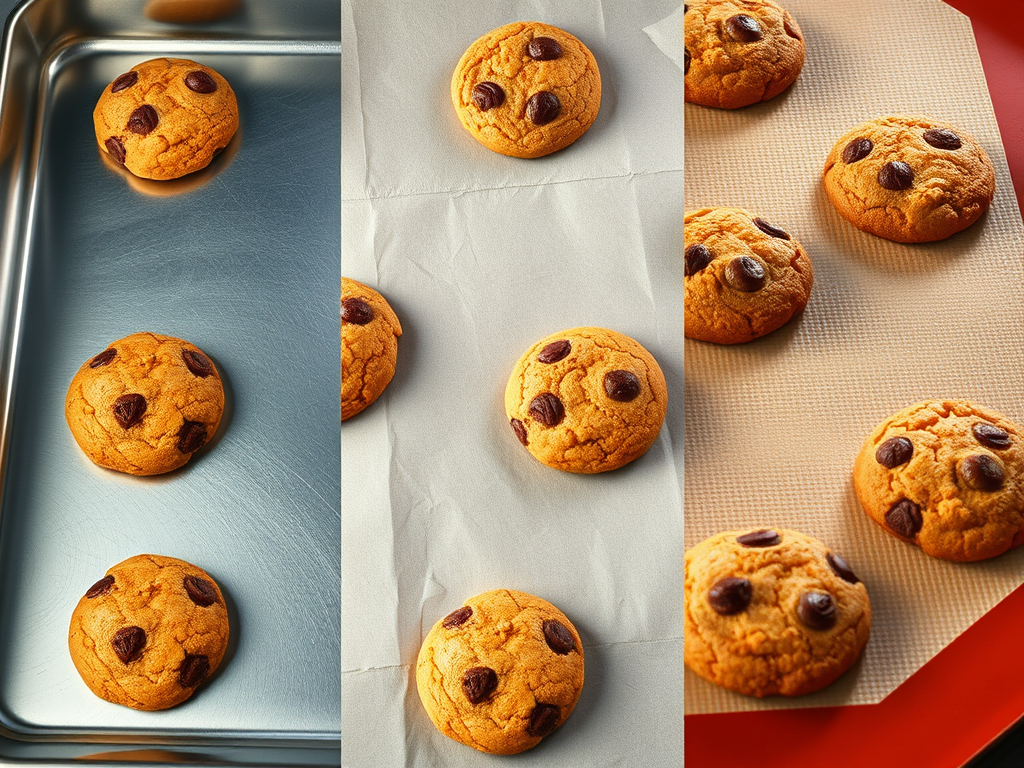
When you place cookie dough directly onto a metal baking sheet, there’s nothing between the dough and the heat source. This creates direct, immediate heat transfer, which means your cookies start baking—and spreading—the moment they hit the oven.
Because of this, cookies baked directly on a pan tend to spread more quickly and develop a crispier, more caramelized bottom. That deep golden color comes from direct contact with the hot metal, which accelerates browning.
This can be a good thing—especially if you love cookies with crispy edges and a slightly chewy center. But it also comes with some risk. Sugar-rich doughs are more likely to stick, and it’s much easier to go from perfectly golden to overbaked in just a minute or two.
This method works best when you want that extra browning and don’t mind a bit of spread—think classic chocolate chip cookies or thinner, crisp-style cookies.
Parchment Paper: The Balanced, Go-To Method
If there’s one baking surface that delivers consistent, bakery-style results every time, it’s parchment paper.
Parchment acts as a thin barrier between your dough and the pan. It slightly slows down heat transfer, which helps cookies bake more evenly from top to bottom instead of browning too quickly underneath. At the same time, it still allows enough heat through to develop that light golden color and proper structure.
One of the biggest advantages is its nonstick nature. High-butter or high-sugar cookies release effortlessly, which means no broken edges or stuck bottoms. It also helps control spread—your cookies will still spread naturally, but not as aggressively as they would on a bare pan.
The result? Cookies with a balanced texture: soft centers, lightly crisp edges, and even color throughout.
For most bakers—and most recipes—parchment is the sweet spot. It’s reliable, forgiving, and incredibly versatile.
Silicone Baking Mats (Silpat): Controlled Spread, Softer Finish
Silicone baking mats, like Silpat, take things a step further by creating more insulation between your cookies and the pan.
Unlike parchment, silicone doesn’t just act as a barrier—it actively slows down how heat reaches the dough. This means your cookies bake more gradually, which reduces spreading and prevents the bottoms from browning too quickly.
That’s why cookies baked on silicone mats often appear lighter on the bottom and slightly thicker overall. The texture tends to lean softer, with less crispness and more tenderness.
This makes silicone mats ideal for thicker cookies, stuffed cookies, or recipes where you want to maintain shape and height. They’re also incredibly helpful if you’ve struggled with cookies spreading too much.
However, that insulation can be a downside if you’re looking for that rich, golden-brown base. Because less browning occurs, you may sacrifice a bit of flavor development—since browning is where a lot of that deep, toasty flavor comes from.
So…Which One Should You Use?
Each surface changes your outcome in a very real way:
- Baking directly on a pan gives you more spread and more browning
- Parchment offers balance, control, and consistency
- Silicone mats reduce spread and create softer, thicker cookies
There’s no single “right” answer—it depends on the type of cookie you’re making and the texture you’re going for.
Final Thought
Once you start paying attention to your baking surface, everything starts to click. The same recipe can produce three completely different results depending on what’s underneath it.
And that’s the moment you go from simply following recipes…
to truly understanding how to bake.

 The Crumb Haus
Leave a comment