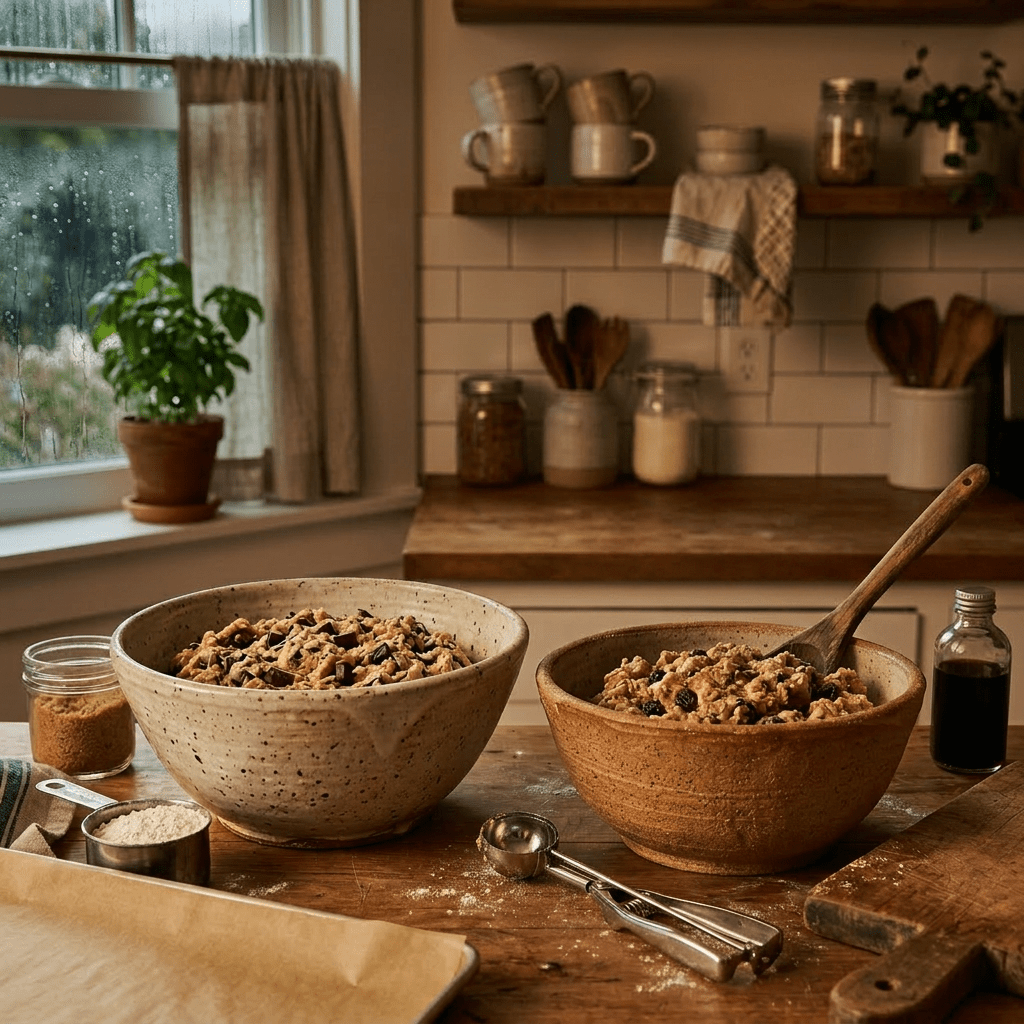
Have you ever followed your favorite cookie recipe exactly as it’s written—same ingredients, same measurements—and ended up with completely different results than you expected?
If so, you’re not alone.
One of the biggest hidden variables in baking is something you can’t control: the weather. Yes, you read that right—the weather!
I’ve learned (sometimes the hard way) that humidity, temperature, and even seasonal changes can dramatically impact how your cookies spread, rise, and taste. The good news? Once you understand what’s happening, you can adjust like a pro.
Let’s break it down.
Humidity: The Silent Cookie Killer (or Helper)
Humidity is hands-down the biggest factor affecting your dough.
Flour is hygroscopic, meaning it absorbs moisture from the air. On a humid day, your flour is already holding extra water before you even start baking.
What that means for your cookies:
- Dough becomes softer and stickier
- Cookies tend to spread more
- Edges may turn out thin and crisp, while centers can feel underbaked
- Cut-out cookies may lose their shape
How to adjust:
- Add 1–3 extra tablespoons of flour (start small!)
- Chill your dough longer than usual
- Lightly flour your work surface when rolling
If your dough feels tacky or slightly greasy, that’s your cue to add a touch more flour.
Dry Weather: The Opposite Problem
On dry days (especially in winter), flour contains less moisture.
What happens:
- Dough can feel stiff or crumbly
- Cookies may not spread enough
- Texture can turn out dense or dry
The good news? It’s an easy fix:
- Reduce flour slightly (by 1–2 tablespoons)
- Add a teaspoon of milk or an extra egg yolk for moisture
- Don’t overmix—this can make dryness worse
Temperature Matters More Than You Think
It’s not just what’s in your bowl—it’s the temperature of your kitchen.
Warm kitchens:
- Butter softens faster, which causes more spread
- Dough can become too loose to hold shape
Cooler kitchens:
- Butter stays firm, resulting in less spread
- Dough may feel harder to work with
Adjustments:
- If your kitchen is warm, chill your dough before baking
- If it’s cool, let dough sit for a few minutes before scooping
Why Your “Perfect Recipe” Isn’t Always Perfect
Even your tried-and-true recipes can behave differently depending on the day. That’s because most recipes are written for average conditions—but we all know baking is anything but average.
The key is learning to read your dough.
Signs your dough needs adjusting:
- Too sticky? Add flour
- Too dry or crumbly? Add moisture
- Spreading too much? Chill the dough and add flour
- Not spreading? Slightly reduce flour or warm the dough
The Crumb Haus Rule of Thumb
When it comes to weather and baking, here’s the mindset shift:
Recipes are guidelines. Your dough is the truth.
Start with the original recipe, then adjust based on how your dough feels that day.
Mastering cookies isn’t just about measuring—it’s about understanding your environment.
Once you start factoring in humidity and temperature, you’ll notice:
- More consistent results
- Better texture
- Cookies that look just as good as they taste
And honestly? That’s when baking becomes less frustrating—and a whole lot more fun.
If you’ve ever had a batch turn out completely different from the last, I’d love to hear about it—because chances are, the weather had something to do with it.

 The Crumb Haus
Leave a comment